


 Inicio /
Elegir una caja de cambios de grúa aérea por su función de izado o desplazamiento
Motor de engranajes en ángulo recto: Suministro eléctrico compatible, Velocidad variable y frenado
26 de octubre, 2026
Planificación de la instalación de un reductor de bisel: Necesidad de girar el eje en una disposición práctica de transmisión
26 de octubre, 2026
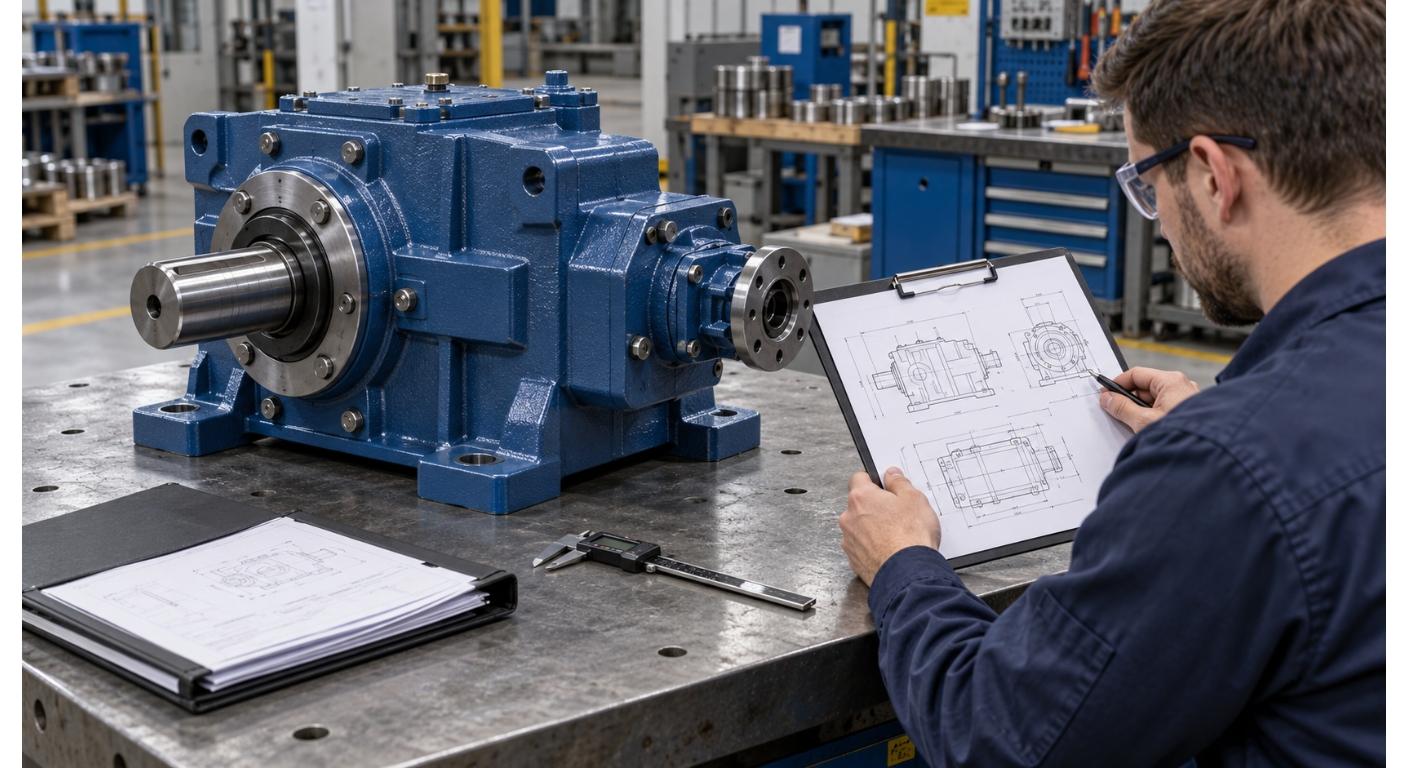
Elegir una caja de cambios de grúa aérea por su función de izado o desplazamiento
26 de octubre, 2026
Sustitución de una caja de cambios de tornillo sin fin industrial: Qué conservar y qué reevaluar
25 de octubre, 2026
Uno de los aspectos más importantes de una consulta de caja de cambios de grúa aérea es determinar el tipo de movimiento que está generando la caja. El par motor, speed and stopping requirements are different when the load is raised up, when the trolley is moved across the bridge, and when the bridge is moved on the runway. The gearbox is not necessarily the same for the three, as crane capacity cannot be used to define the gearbox.
A starting point for crane builders, maintenance engineers and project buyers is a specification at the level of the mechanisms. This guide provides an overview of how to set up and where Mingye's family of industrial transmissions can submit an application for a review, without assuming a general product listing means crane suitability.
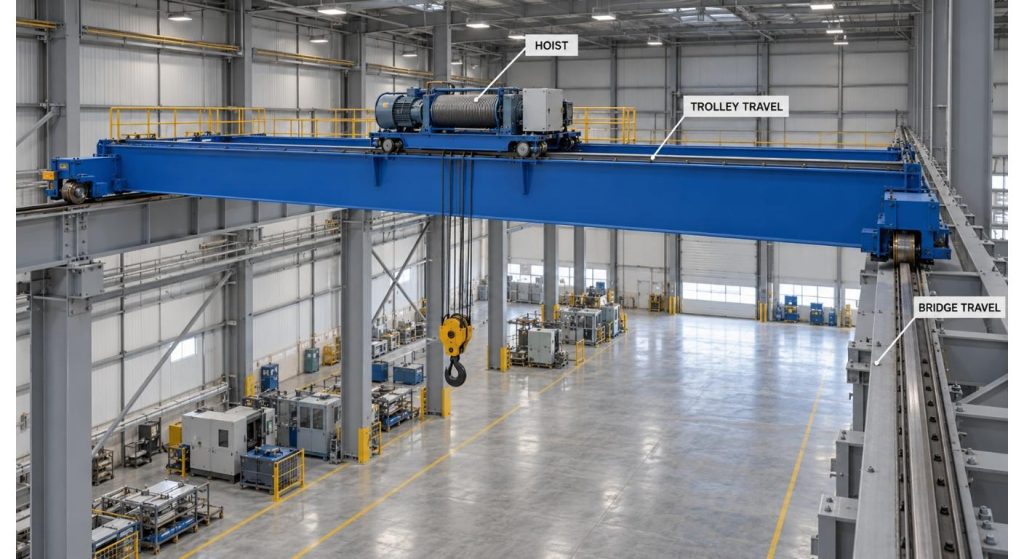
One Hoisting Trolley Travel and one Bridge Travel.
The lifting and lowering is achieved by the hoisting mechanism which is combined with ropes or chains. A wire-rope system is used to connect the output speed of the gearbox, the drum rotation, the reeving and lifting speed. It will also need to have its drive checked for a lowered behavior and the consequences of loss of motor torque.
The hoist assembly is translocated by trolley travel across the bridge. The movement of travelling along the runway is achieved by bridge travel. Analysis of the rolling resistance, moving mass, Aceleración, braking and the wheel drive arrangement are required for these horizontal movements. They are not a direct replacement to the weight of the suspended load as a substitute for the torque in the wheel.
On each enquiry and drawing, specify the particular mechanism. Make sure to add if it is single drive, mechanically linked outputs or separate driven wheels. When replacing a bridge travel unit it must not be chosen based on a description of a hoisting unit, merely because the two are part of the same crane.
Convert Lift o Travel Speed to Shaft Speed
Determine the drum speed of a wire-rope hoist based on lifting speed, effective drum diameter and the arrangement of the rope on the drum. Take hook-block mass into consideration for the appropriate lifting load. Effective radius of ropes can vary with a change in rope layering, por lo tanto, use an operating range that is identified rather than one convenient diameter.
Convert linear speed to wheel speed using the diameter of the driven wheel and for travel account for any additional gearing. The necessary reduction is the actual motor speed over gearbox output speed. The nominal synchronous speed of a motor does not necessarily correspond to the speed that the motor runs at in the loaded condition.
Explain the terms creep speed, normal speed, acceleration and deceleration if they apply. Variable-frequency control, check the full range of motor speeds, motor cooling and gearbox input limits. Fulfilling one nominal speed is not sufficient for an acceptable behavior during all commanded movements.download.
Consider using Mechanism Duty instead of Crane Tonnage only.
The transmission duty may be very different for two cranes of the same lifting capacity. One may perform an occasional maintenance lift, another may be doing repetitions of loaded lifts all day long. Selection is influenced by starting frequency, Reversiones, operating time and distribution of level of loading.
Classify and give the appropriate crane and mechanism duty information, as per the system adopted for the project. Always avoid determining a generic gearbox service factor from a crane class without reference to the manufacturer's selection method and the project requirements.
Be sure to distinguish normal running torque, the acceleration demand, peak events and stopping duty. When reducing or slowing down, power can be fed back to the motor, which can impact drive and braking demands. Consider the gearbox, Motor, controls and brake as a package rather than relying on a large motor as a solution.
It is important to review Mingye Product Families against the Actual Mechanism to understand the product details.
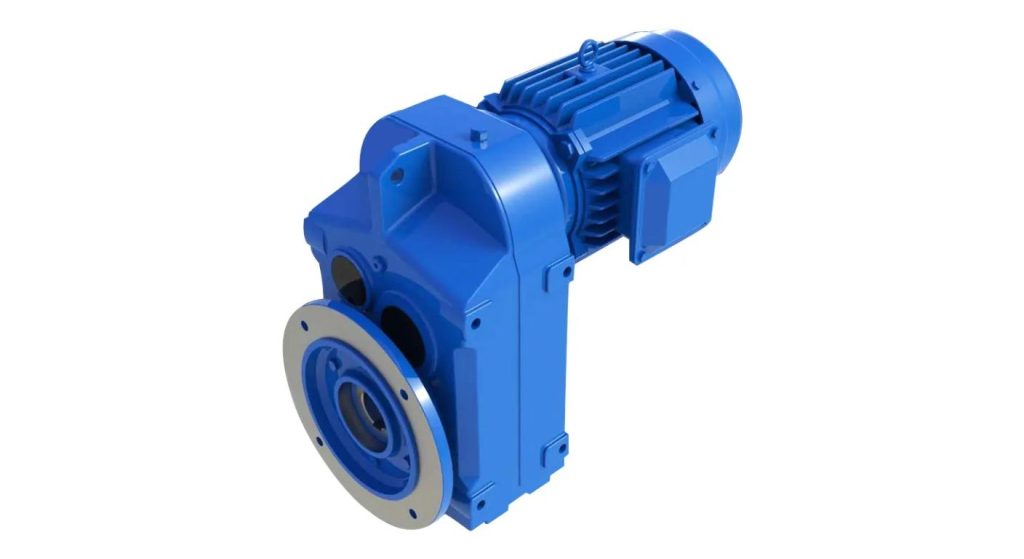
Mingye's Motor de engranajes helicoidales de eje paralelo de la serie F offers a compact parallel-shaft design that is applicable to reviewing wheel drive layouts. It is described as a modular mounting and conveying/transport Product. There are still the output connection, wheel loading, Servicio, braking and dimensional fit requirements to confirm for a crane travel proposal.
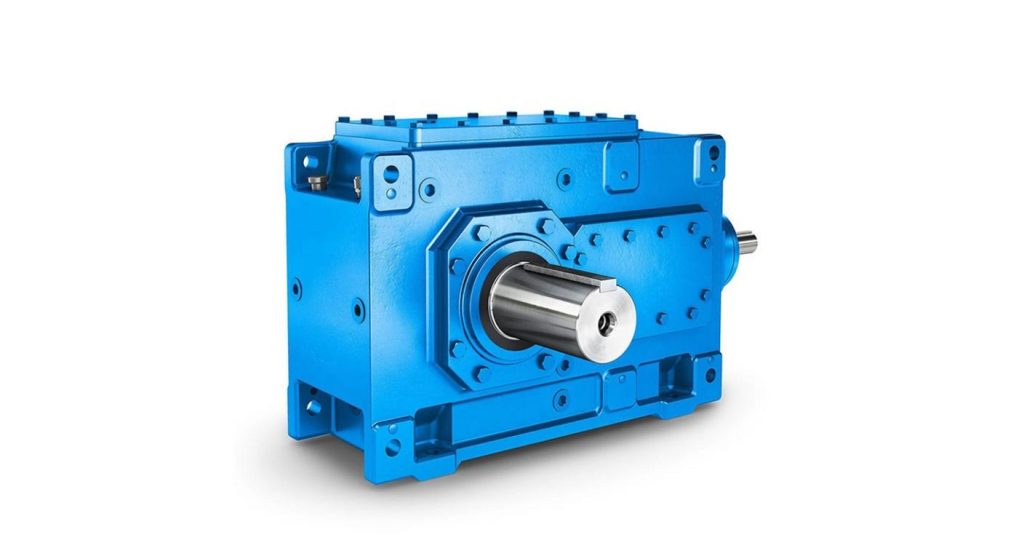
El B Series industry size transmission gear unit is available in cylindrical, spiral bevel gearing options, with a variety of inputs, output options and mounting options for larger industrial transmission layouts. These features give configuration possibilities and not a specific hoist capacity and mechanism classification.
Other applications listed on the Motor de engranajes cónicos helicoidales de la serie K page also include cranes and lifting applications. Talk about it if a right angle layout is needed, with the actual mechanism determined. Prior to use in a hoist or crane travel assembly, get confirmation for use in the specific application from the family. Photographs of products cannot be used to create an approved crane installation.
When the snow has been displaced, define Holding and Stopping as Separate Functions.
It's not the same to stop a suspended load as it is to hold it stationary. Specify the behavior that is required on normal stop, on loss of power and on relevant fault condition. The location of the brake in the transmission also determines what parts are in the restraint path.
Mingye refers to the power loss in the vertical axis in holding, Detenerse, engagement timing and independent restraint. Make use of this distinction when talking about hoisting requirements and the responsibility for the whole of the crane design and applicable verification.
Never presume a gearbox to be self-locking and also do not presume that a listed brake will meet all the emergency situations. Check the brake torque, shaft release and engagement, control coordination and allowed stopping duty. But these questions are answered not by the torque capacity of the gears, alone, but by gearbox torque capacity.
Keep Wheel Drum and Mounting Interfaces.
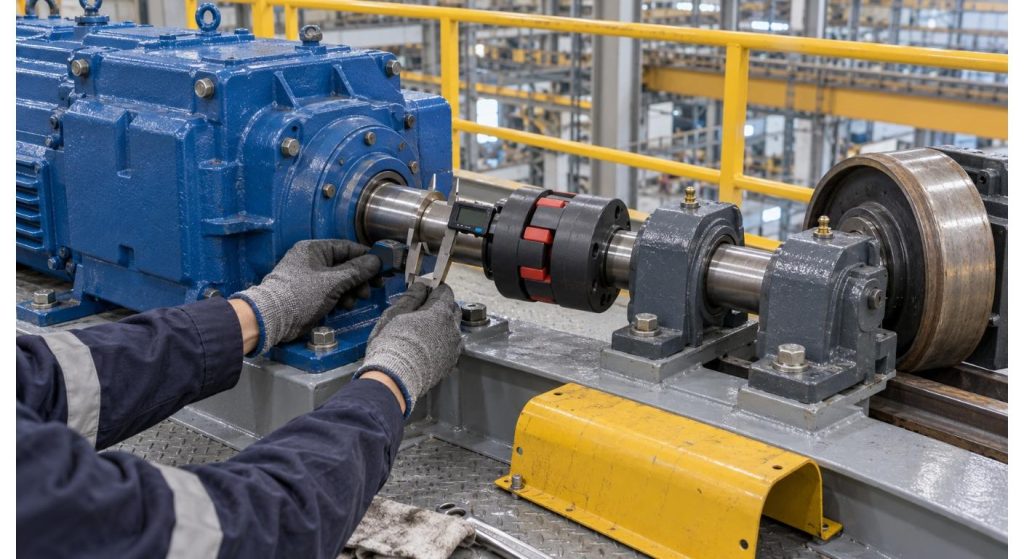
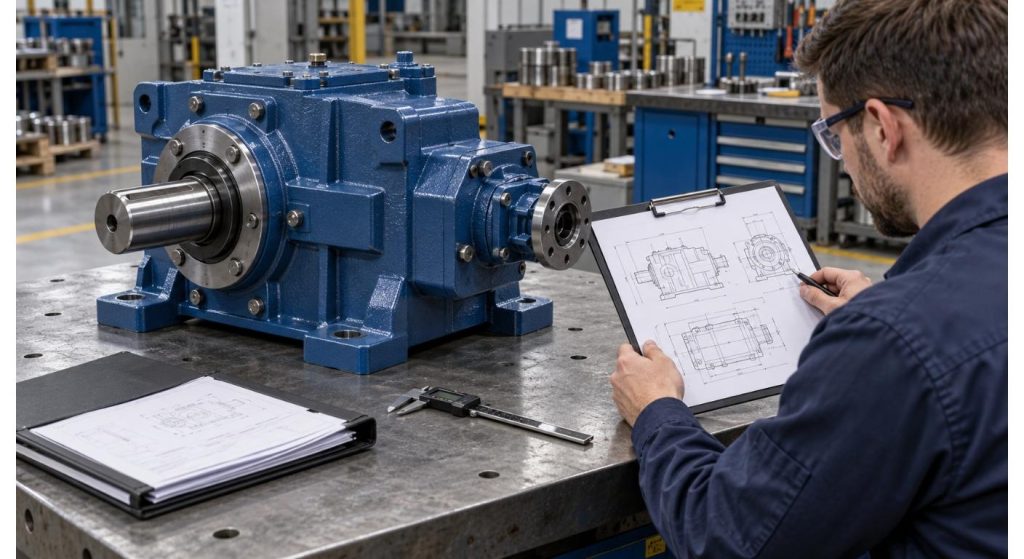
When replacing them, record the original nameplate, Dibujos, Disposición de los ejes, bearing supports, location of mounting and service space. Note down brake and motor interfaces, and gearbox dimensions. Existing couplers, drums or wheel assemblies may not fit if the matching ratio and power is the same.
Explain supporting of external radial and axial forces. The load path through a drum or wheel with independent bearings is different from one that loads the bearings directly at the output of the gearbox. Submit forces, offsets and connection information for review.
On separately driven bridge wheels ensure ratio, wheel size, motor parameters and control principle are compatible. Coordinated travel and the avoidance of skewing cannot be guaranteed by equal nominal gear ratios of the gearboxes. The condition of the runway and wheels as well as installation alignment also is of importance.
Review and mark Enquiry/Acceptance as Reviewable.
Send a mechanism drawing, Requisitos de velocidad, load history, duty classification, interfaces and environmental conditions to Send Mingye. Inquire about the possibility of standard configuration or modular adaptation that will fulfill those needs. Verify lubrication, Dirección de montaje, access and any applicable inspection documentation for the proposed product.
Machining and dimensional inspections are displayed on the website. Determine records and factory tests required for the order, and differentiate between tests on components and tests on the assembly running. The two do not substitute for the crane-level commissioning and verification that need to be done on the equipment once it is completed.
| Review Level | Evidence to Confirm |
| Componente | Agreed dimensions and applicable inspection records |
| Gearbox assembly | Configuración, Ratio, and documented test conditions |
| Installed mechanism | Alineación, Conexiones, Rotación, and brake integration |
| Complete crane | Project-required functional verification and commissioning records |
The gearbox of an overhead crane should be determined for a specific movement and confirmed load path. Separating hoisting requirements from travel requirements provides a helpful input to the suppliers and a proposal for the crane engineering team to review.
Preguntas frecuentes
Q1. Is crane lifting capacity enough to specify the size of gearbox?
No. The type of drive, Geometría, speed of the operation, load cycle and stopping requirements are also important. Evaluation of hoisting and travel drives is to be carried out separately.
P2. Is it possible to use the same gearbox for hoisting and travelling?
A product family can provide relevant product configurations, but not necessarily. They should each have their own rating, interface and functional review.
P3. Does a gearbox – that is suitable – replace the hoist brake?
For the entire hoisting system, holding and stopping functions need to be designed and tested. Do not presume automatic restraint is being provided by the reducer.
P4. Are the same bridge-drive ratios for the two bridges the same as synchronized travel?
No is not the only number that affects coordination, other factors include wheel diameters, motor characteristics, Controles, alignment and runway conditions. Read through the entire travel plan.
P5. Is crane approval given by a listing of a general Mingye gearbox?
No. Start a technical discussion using the listing. Get the confirmation of the actual crane mechanism, Servicio, interfaces and project verification requirements.
Compartir en redes sociales:


Contáctanos
En este artículo
Motor de engranajes en ángulo recto: Suministro eléctrico compatible, Velocidad variable y frenado
26 de octubre, 2026
Planificación de la instalación de un reductor de bisel: Necesidad de girar el eje en una disposición práctica de transmisión
26 de octubre, 2026
Elegir una caja de cambios de grúa aérea por su función de izado o desplazamiento
26 de octubre, 2026
Sustitución de una caja de cambios de tornillo sin fin industrial: Qué conservar y qué reevaluar
25 de octubre, 2026